Seven vitamins and minerals with amounts printed on the label, plus fourteen botanicals and carotenoids — including lutein, zeaxanthin, bilberry and saffron. Here is what each ingredient contributes, where the evidence genuinely stands, and what the official website actually charges.
Check Today’s Price See Packages

Produced in an FDA-registered facility under GMP standards, distributed from Aurora, Colorado.
Lutein, zeaxanthin, lycopene and astaxanthin — four carotenoids in one capsule.
All seven vitamins and minerals show exact amounts on the Supplement Facts panel.
One-time payment. No subscription, nothing to cancel — six full months to decide.
Worth knowing before you scroll: no supplement is FDA approved — dietary supplements are regulated as food, not medicine. Facility registration and GMP certification describe manufacturing conditions, not proof the finished formula works. That applies to Visium Pro and every competitor equally.
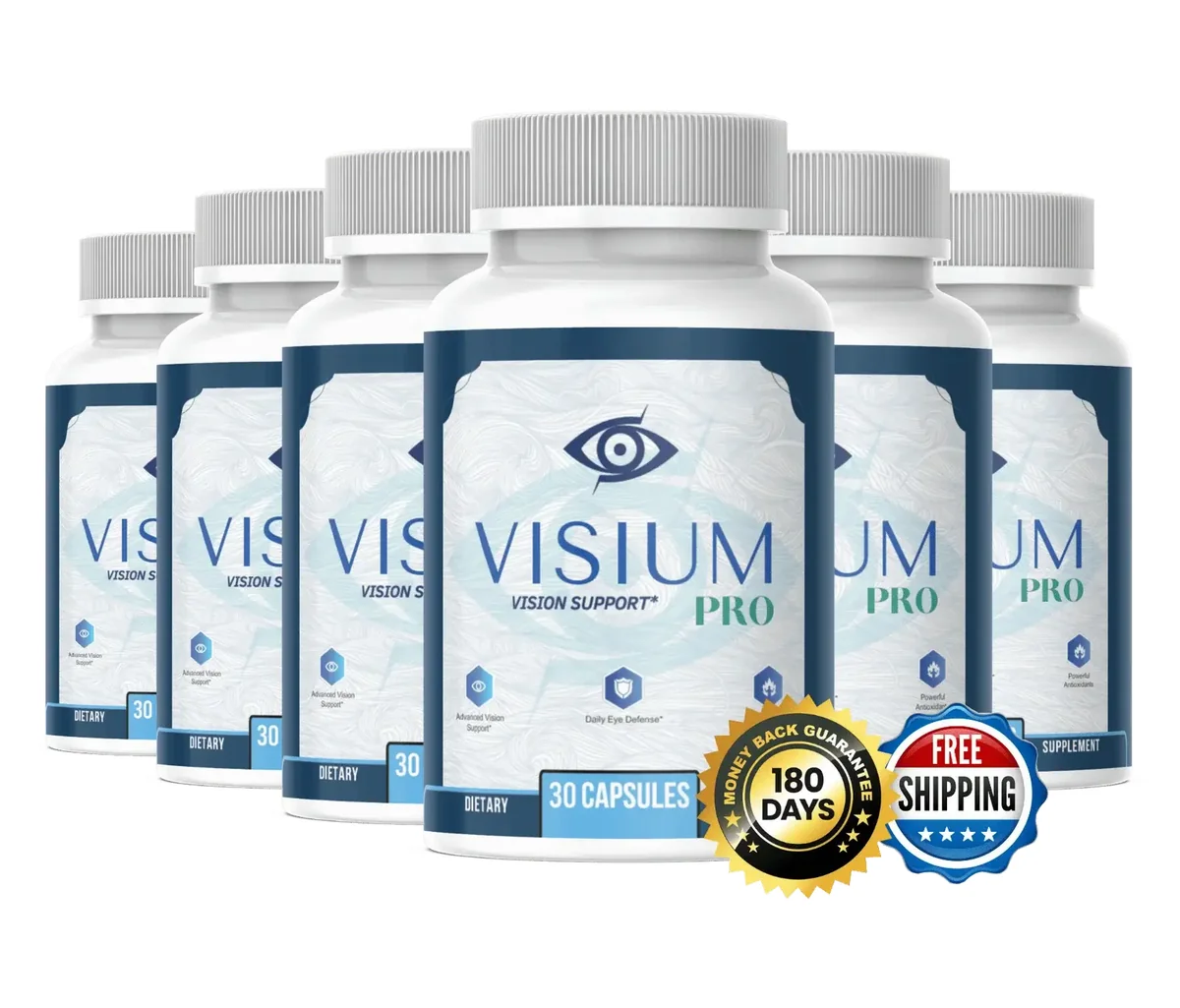
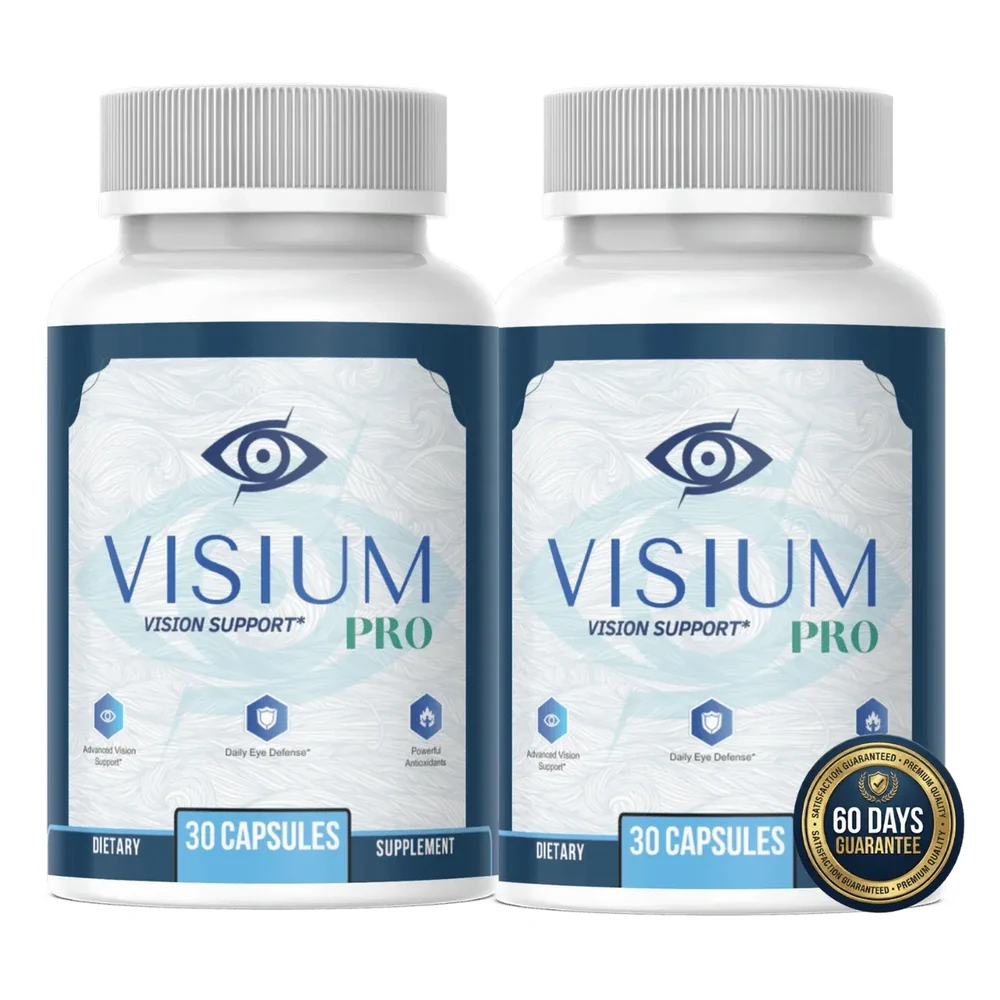
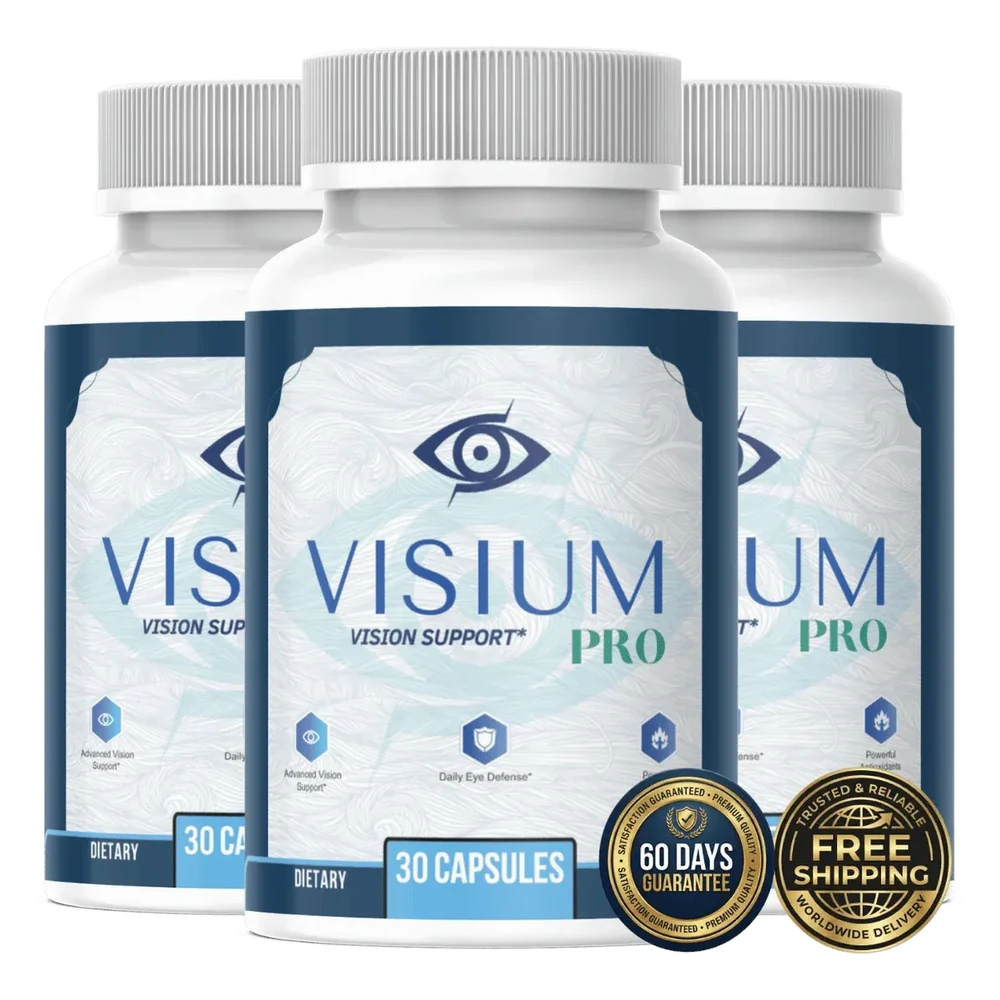
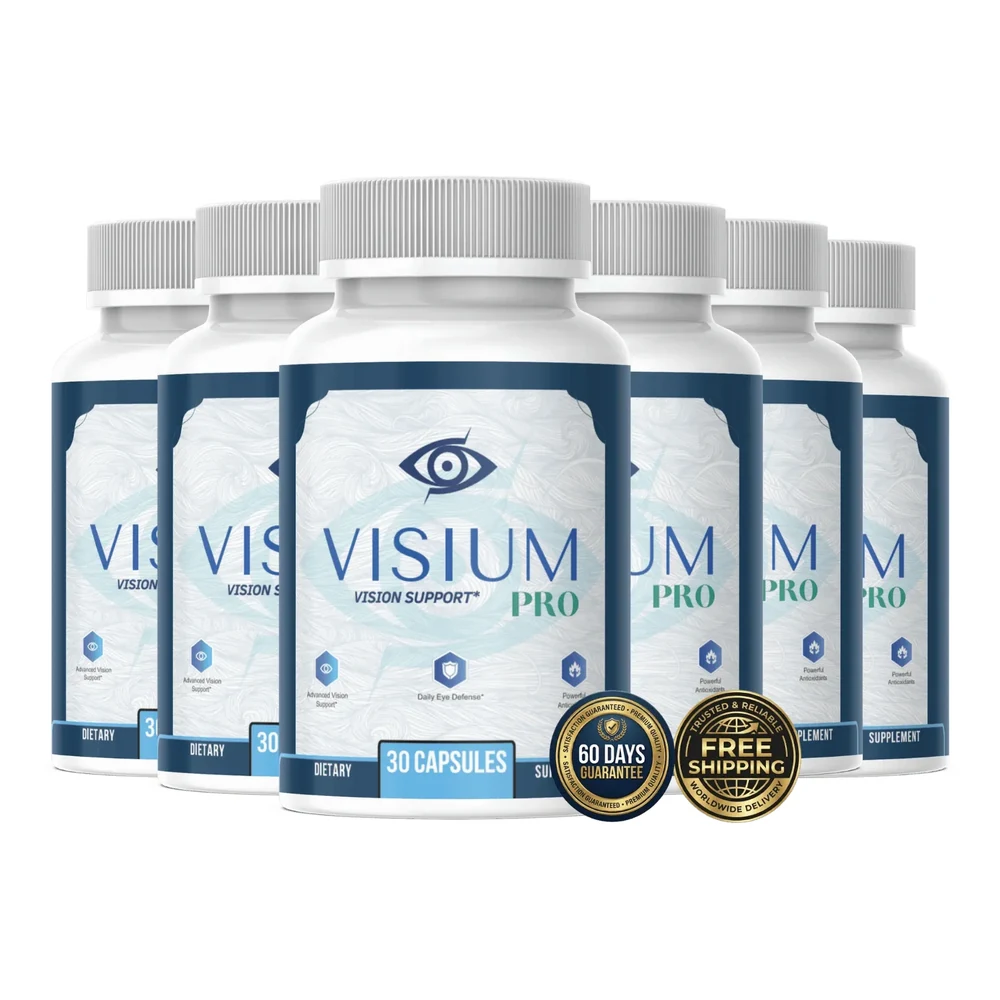
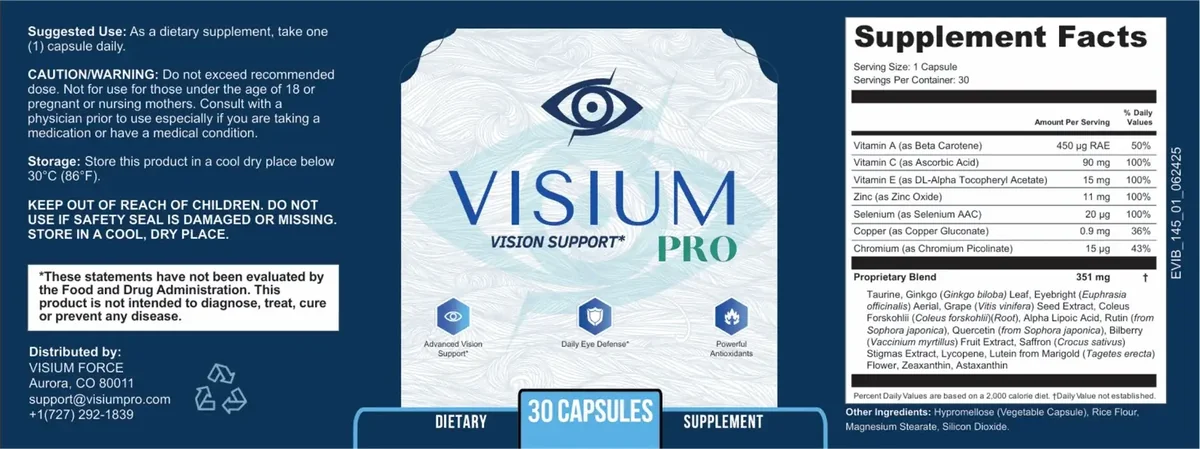
Visium Pro is a once-daily vision support capsule sold through its official website. Each bottle holds 30 capsules — a one-month supply — and the Supplement Facts panel splits into two parts: seven vitamins and minerals with exact amounts, and a 351 mg proprietary blend of fourteen botanicals and carotenoids.
The disclosed portion is genuinely respectable. Vitamin C sits at 90 mg (100% DV), vitamin E at 15 mg (100% DV), zinc at 11 mg (100% DV), with vitamin A, selenium, copper and chromium alongside. Zinc, copper, and vitamins C and E are four of the five nutrients used in the landmark AREDS eye studies — so the mineral backbone here is modeled on the most serious research this category has.
The blend is where the marquee names live: lutein and zeaxanthin (the macular carotenoids), bilberry, saffron, taurine, ginkgo, eyebright, grape seed, alpha lipoic acid, rutin, quercetin, lycopene, astaxanthin and coleus forskohlii. Fourteen ingredients inside 351 mg means individual amounts are undisclosed and necessarily modest — an honest limitation we return to in the evidence sections below.
Sold through the official website. Every package is a one-time payment — no subscription and nothing to cancel. The single bottle adds a $9.99 shipping fee; bundles ship free.

Three routes, and the first is the one backed by two of the largest randomized trials ever run in nutrition.
Lutein and zeaxanthin concentrate in the macula, where they filter high-energy blue light and act as local antioxidants. AREDS2 — 4,203 participants over five years — used exactly these two carotenoids in its updated formula for people with intermediate age-related macular changes.
Vitamins C and E, zinc, selenium, copper, astaxanthin and grape seed target oxidative stress, which retinal tissue is unusually exposed to because of its high oxygen use and constant light exposure. The AREDS mineral pattern is visible in this half of the label.
Ginkgo, bilberry, rutin and quercetin are included for microcirculation and capillary support, and taurine is one of the most abundant amino acids in the retina. Evidence for these is more mixed than for the carotenoids — the ingredient section below is specific about it.
Every ingredient below appears on the actual Supplement Facts panel — seven with disclosed amounts, fourteen inside the 351 mg blend. Here is what the evidence supports for the ones that matter most.

The two carotenoids your macula physically accumulates, and the pair AREDS2 settled on after beta-carotene was dropped for safety. Research doses run 10 mg lutein + 2 mg zeaxanthin daily; Visium Pro includes both inside its blend without stating amounts, so a direct dose comparison is not possible. Their presence is the right call — the transparency could be better.
The disclosed backbone of the formula and the closest match to the AREDS mineral pattern. The original AREDS trial found its antioxidant-plus-zinc combination reduced progression risk in people who already had intermediate macular changes. Visium Pro’s zinc (11 mg) is far gentler than the 80 mg AREDS dose — easier on the stomach, but also a different regimen than the trials used.
The famous “night vision berry.” The honest position: a systematic review of placebo-controlled trials found rigorous studies did not support bilberry improving normal night vision, while lower-quality older trials were positive. Its anthocyanins remain reasonable antioxidants; just don’t buy this product for night-vision promises alone.
One of the more promising botanicals in recent eye research — small randomized trials in early macular degeneration have reported measurable retinal-function improvements at around 20–30 mg daily. Whether Visium Pro’s blend carries a comparable amount is undisclosed.
One of the highest-concentration amino acids in retinal tissue, involved in photoreceptor maintenance. Severe taurine deficiency damages vision in animals; whether supplementing beyond a normal diet helps human eyes is not yet established.
Ginkgo has long been studied for microcirculation, and rutin and quercetin are flavonoids associated with capillary integrity. Evidence tied specifically to eyesight outcomes is thin — these are supporting players, not the reason to choose the formula.
Astaxanthin has small trials on screen-related eye fatigue; lycopene and alpha lipoic acid are general antioxidants with mechanistic rather than clinical eye evidence. They round out the formula’s antioxidant theme.
Eyebright (Euphrasia) is a centuries-old herbal for eye comfort with little modern trial support taken orally. Coleus forskohlii is best known outside eye care entirely. Both are minor blend members — treat them as tradition, not evidence.
Each is a possibility rather than a promise, and none has been demonstrated with the finished Visium Pro formula itself. Restored eyesight or thrown-away glasses are deliberately not on this list.
Lutein and zeaxanthin supply the carotenoids the macula physically stores — the best-evidenced mechanism in this category.
Astaxanthin and the carotenoids are studied for eye fatigue during long screen exposure, with small positive trials.
Vitamins C and E, zinc, selenium and copper mirror the AREDS antioxidant-mineral pattern at gentler doses.
Taurine, zinc and vitamin A are all nutrients retinal tissue uses heavily every single day.
Ginkgo, rutin, quercetin and grape seed target the small vessels that feed the eye.
Vitamin A supports the visual cycle itself; bilberry’s night-vision reputation, as noted above, outruns its trial record.
Three themes recur in buyer feedback: comfort during screen work is the change people mention first, timelines run in months rather than days, and nobody credible reports throwing away their glasses.
“I sit at a monitor nine hours a day and my eyes used to feel sandy by mid-afternoon. Around week five that gritty feeling mostly stopped. My prescription hasn’t changed — I want to be honest about that — but the end-of-day strain is genuinely better and one capsule is easy to keep up.”
Kathleen M., 58 — Arizona
“Bought the six-pack for my husband and me after his optometrist suggested a lutein supplement. Visium Pro had it plus the zinc and vitamins in one capsule, which beat the three separate bottles we were juggling. Four months in, checkups were steady and the price per bottle worked out cheaper than our old stack.”
Robert & Elaine T., 66 — Florida
“Taking one star off because the blend doesn’t list individual amounts and I like to compare against studies. That said, night driving feels less glary than last winter and I’ve had zero stomach trouble, which I can’t say for a previous eye vitamin with 80 mg of zinc. Reordered once so far.”
Dennis P., 61 — Ohio
A 180-day window — six full months — which is three times what most supplements in this category offer and long enough to genuinely judge a nutrient formula, since eye-comfort changes are typically reported over 6 to 12 weeks.
Contact support through the official website for return instructions before sending anything back. Keep your order confirmation email for the order number, note the deadline in your calendar, and start the process with time to spare rather than on the final day.
Sudden blur, eye pain, flashes, floaters or fading side vision are exam-room problems, not supplement problems. See an optometrist or ophthalmologist before spending money on capsules.
Ginkgo can interact with blood thinners such as warfarin, and zinc can interfere with certain antibiotics. On prescription medication, ask your pharmacist first — it takes five minutes.
Visium Pro is not sold in stores, and marketplace listings carry counterfeit risk with no guarantee coverage. Current pricing and the 180-day guarantee apply only to official-site orders.
Confirm the total after shipping, that no extra was pre-selected, and that the package matches what you chose. Screenshot the confirmation for your records.
Secure your Visium Pro package while stocks last. Official website only, one-time payment, and the 180-day money-back guarantee applies to every package below.

Visium Pro is a once-daily vision support capsule made in the USA. Its label lists seven vitamins and minerals with disclosed amounts — vitamin A, vitamin C, vitamin E, zinc, selenium, copper and chromium — plus a 351 mg proprietary blend of fourteen botanicals and carotenoids including lutein, zeaxanthin, bilberry, saffron, taurine and astaxanthin. It carries a 180-day money-back guarantee.
Yes. Visium Pro is sold exclusively through its official website and is not stocked in pharmacies, Walmart or health stores. Amazon and eBay listings are third-party resellers: the manufacturer’s pricing and 180-day guarantee do not apply to them, and authenticity cannot be verified. Every link on this page routes to the official order page.
Three packages: a single bottle at $69 plus $9.99 shipping, three bottles at $59 per bottle ($177, free US shipping, one bonus eBook), and six bottles at $49 per bottle ($294, free US shipping, four bonus eBooks). All are one-time payments — there is no subscription to cancel.
No — and be wary of any page that says otherwise. No supplement reverses refractive error, cataracts, glaucoma or macular degeneration. What nutrient formulas like this can realistically support is eye comfort and long-term nutritional defense; in the AREDS trials, the benefit was slower progression in people with existing intermediate macular changes, not restored vision. Keep your glasses and your eye exams.
One capsule daily — each 30-capsule bottle is a one-month supply. The label suggests taking it with a meal; the carotenoids it contains are fat-soluble, so pairing it with food that contains some fat supports absorption. Do not exceed the stated dose.
Judge it in months, not days. Carotenoid levels in the macula build gradually — studies measuring macular pigment changes typically run 8 to 12 weeks or longer — and buyer reports here echo that timeline for comfort changes. This is the practical argument for the multi-bottle packages and the reason the 180-day guarantee is long enough to be meaningful.
The disclosed doses are conservative — zinc at 11 mg is the standard daily value, not the 80 mg used in AREDS that bothered some stomachs. The formula is stimulant-free. Two sensible flags: ginkgo can interact with blood-thinning medication, and anyone pregnant, nursing, under 18 or managing a medical condition should ask a doctor first — the label itself says the same.
Not exactly, and the difference matters. It shares the AREDS2 spirit — lutein, zeaxanthin, zinc, copper, vitamins C and E — but at different amounts: AREDS2 used 500 mg vitamin C, 80 mg zinc and disclosed carotenoid doses, while Visium Pro uses daily-value-level minerals and an undisclosed blend. If an ophthalmologist has told you to take an AREDS2 formula for diagnosed macular changes, use one and don’t substitute this.
The product is real, the label is a genuine Supplement Facts panel, and the 180-day refund window is unusually long — all points in its favor. The honest criticisms: the proprietary blend hides individual amounts, and some third-party ads for this category overpromise wildly. Buy it for what it is — a broad eye-nutrition capsule — through the official site, and ignore any ad promising restored eyesight.
Anyone under 18, pregnant or nursing, anyone on blood thinners or diabetes medication without medical clearance (ginkgo and chromium respectively are the reasons), and anyone using it in place of treatment for a diagnosed eye condition. When in doubt, the five-minute pharmacist conversation is free.
180 days from purchase, on every package size. Contact support through the official website for return authorization, then follow their instructions. Keep your order number, and start the process before the deadline rather than on it.
Set expectations carefully here. Vitamin A genuinely supports the visual cycle, and deficiency harms low-light vision — but deficiency is rare in developed countries. Bilberry’s night-vision fame comes from wartime legend more than trials: the systematic review evidence does not support it improving normal night vision. Some buyers report less glare when driving at night; treat that as anecdote, not a guaranteed outcome.
Real, verifiable PubMed records covering ingredients in this formula. None of these studies tested Visium Pro itself.
Regular Price: $149/per bottleToday: $49/per bottle
On the 6-bottle package · Free US shipping · 4 bonus eBooks · 180-day money-back guarantee
Get Your Discount NowOne-time payment · No subscription · Secure checkout
The four things that decide it, side by side.
Rather than one hero ingredient, Visium Pro assembles the AREDS-style mineral backbone — zinc, copper, vitamins C and E — under fourteen botanicals led by lutein and zeaxanthin, the two carotenoids serious eye research keeps returning to. The design follows the science this category actually has.
Seven vitamins and minerals carry printed amounts at meaningful daily values; the fourteen blend members share 351 mg without individual figures. Half-transparent is better than the category norm — and this page has been specific about which half is which.
One capsule daily, stimulant-free, 30 per bottle, made in the USA in an FDA-registered facility. No drops, no routines, no subscription and no auto-ship to cancel.
A 180-day money-back guarantee — six months, three times the category standard, and comfortably longer than the 8–12 weeks eye-comfort changes typically need to show themselves.
The verdict: if you spend long days on screens or simply want the eye-nutrition bases covered by one capsule instead of three bottles, Visium Pro is a sensibly built formula with an unusually generous safety net. At $49 per bottle on the six-bottle package with free US shipping and four bonus eBooks, the official website is where both that price and the 180-day guarantee live.
Additional reference: Visium Pro product guide on FactoWiki.